Latin America has spent years being talked about in global boardrooms as a talent reservoir – a place to find skilled engineers at competitive rates, conveniently overlapping with U.S. time zones.
That narrative is familiar, and largely true; but it’s also incomplete.
The more pressing question for the region’s tech ecosystem today is whether Latin America can evolve from a place where global companies hire into a place where they genuinely build with full operational infrastructure, cultural integration, and long-term capacity.
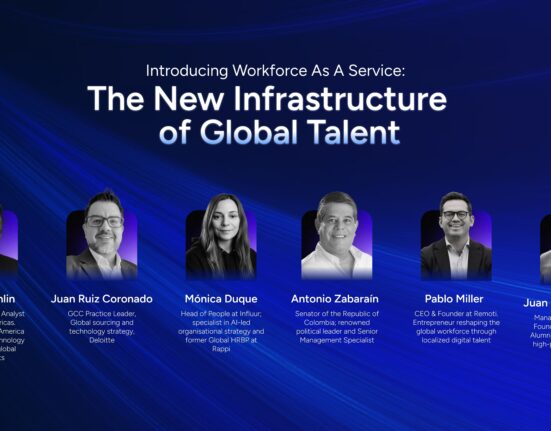
That shift was the central thesis behind Remoti’s April 14, 2026 event in Bogotá, where the company unveiled its Workforce-as-a-Service (WaaS) model and launched the Remoti App in front of global tech executives, investors, and industry leaders.
The gap between hiring and building
Sourcing tech talent across Latin America has never been easier. What remains hard – and largely unsolved at scale – is operating that talent effectively across borders.
The regulatory landscape alone is a significant barrier. Brazil, Argentina, Mexico, and Colombia each carry distinct labor frameworks, tax obligations, and payroll structures. For a U.S. or European tech company building a distributed team across multiple Latam markets, compliance isn’t a checkbox, but rather an ongoing operational challenge that most companies are underprepared for.
Retention compounds the problem. With 67% of tech workers expected to be working remotely by 2026, the competition for skilled talent in the region is intensifying; salary is no longer a differentiator.
The benefits that actually move the needle – home office stipends, flexible scheduling, wellness programs, financial tools, personalized upskilling – require infrastructure that most foreign employers haven’t built.
The WaaS model
Remoti’s proposition is that this infrastructure layer should be productized. The WaaS model covers the full operational stack, including recruitment, HR, payroll, compliance, retention, and an expanding suite of financial services and benefits.
“Complexity demands structure, and scale demands a new operating model. WaaS is that model,” said Pablo Miller, CEO and founder of Remoti.
“It allows companies to create integrated teams in Latin America that collaborate seamlessly with their counterparts in the U.S. and Europe, ensuring alignment in culture, performance, and results. This is definitely not outsourcing, but rather the infrastructure of the modern workforce.”
The Remoti App packages this into three layers: Global Opportunities for talent sourcing, Workforce Operation for distributed team management – compliance, payments, payroll – and a Marketplace & Financial Products layer that includes a global wallet and retention-focused financial tools.
The bigger picture
The evening’s panel, “The New Role of Global Talent in Latin America,” brought together voices from across the tech policy and industry spectrum: Dr. Antonio Zabarain, the Colombian congressman behind the country’s technology promotion law; Kirk Laughlin, founder of Nearshore Americas; Christopher Snyder, Senior VP of Engineering at Cast and Crew; alongside Mónica Duque and Juan Ruiz Coronado.
The conversation pointed to a gap that goes beyond any single company’s product. For Latin America to function as a genuine global operating hub, not just a talent pool, it needs coordinated progress on both the private infrastructure and public policy sides.
The market opportunity is hard to ignore. Global Capability Centers represent a $172 billion category today, with projections surpassing $400 billion by 2032. Latin America’s share of that growth depends on whether the region can offer not just talent, but the systems to manage it sustainably.
“This launch marks a structural shift in how organizations think about redistributing their operations and accessing talent,” said Juan Felipe Velasco Sáez, co-founder and managing director of Remoti.
“It is the result of almost 10 years of building, operating, and refining a model alongside international companies, until consolidating it into a clear proposition.”
The region’s transformation from recruitment destination to operational platform won’t happen through talent availability alone; it will happen through infrastructure. And that infrastructure is starting to take shape.
Featured image: Via BabyInBrazil
Creative Commons Licenses

Disclosure: This article mentions clients of an Espacio portfolio company.